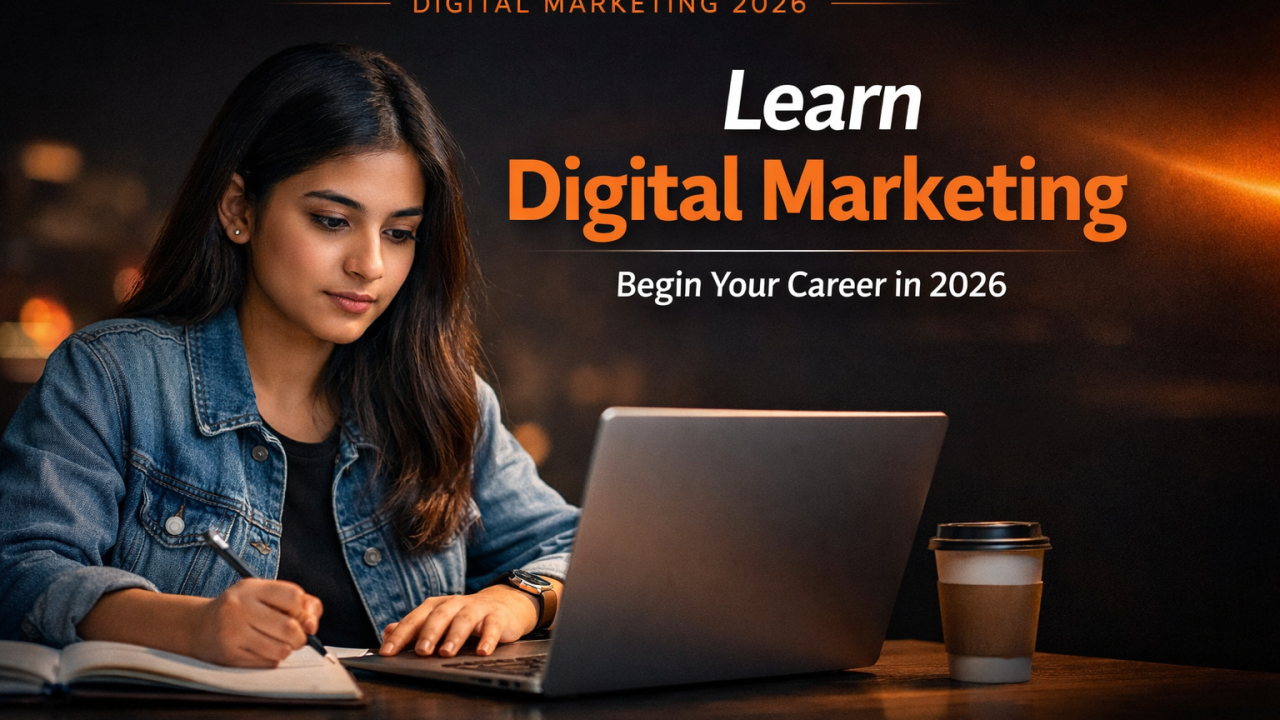
Digital marketing for beginners is one of the most practical career paths to explore in 2026. As businesses increasingly depend on websites, search engines, social media, online advertising, and AI-powered tools, the demand for people with digital marketing skills continues to grow.
The good news is that you don’t need years of experience to start. With the right learning path, practical projects, and consistent practice, you can build the skills needed to enter the digital marketing industry.
In this guide, we’ll explore what digital marketing is, the essential skills you need, how AI is changing the industry, and how you can start building your career in 2026.
Digital marketing refers to promoting products, services, or brands through online channels.
Instead of relying only on traditional advertising such as newspapers, television, or billboards, businesses use digital platforms to reach potential customers.
Some major areas of digital marketing include:
Each area requires different skills, but they work together to create an effective online marketing strategy.
The digital marketing industry is evolving rapidly. Businesses are not only looking for people who can create social media posts or run advertisements. They need professionals who understand data, customer behavior, search, automation, content, and AI.
AI is particularly important in 2026 because marketers can use it to support activities such as:
However, AI doesn’t completely replace marketers. Instead, professionals who know how to combine marketing knowledge + AI tools + human creativity can work more efficiently.
If you’re starting your career, you don’t need to master everything immediately. Begin with the fundamentals and gradually specialize.
SEO helps websites improve their visibility in search engine results.
You should understand:
Learning SEO can help you understand how people search for information and how businesses can attract organic traffic.
Social media is an important channel for building brand awareness and engaging customers.
You can learn how to create strategies for platforms such as:
Important skills include content planning, audience research, creative development, engagement, and performance analysis.
Paid advertising allows businesses to reach targeted audiences through search engines and other advertising platforms.
Beginners should learn:
Practical experience is particularly valuable in paid advertising because understanding campaign data is as important as knowing how to create an advertisement.
Beginners can also strengthen their practical knowledge by exploring Google’s official training resources through Google Skillshop.
Content marketing focuses on creating useful content that attracts and educates an audience.
Content can include:
Good content should solve a problem, answer a question, or provide useful information to the target audience.
Marketing decisions should not be based entirely on assumptions.
You should learn how to understand metrics such as:
Analytics helps marketers identify what is working and what needs improvement.
AI has become an important part of modern marketing workflows.
For example, marketers can use AI to brainstorm content ideas, analyze large amounts of data, create initial content drafts, identify patterns, and automate repetitive tasks.
But there is an important difference between using AI as a tool and depending entirely on AI.
Successful marketers still need human skills such as:
The best approach is to use AI to improve productivity while keeping human judgment at the center of marketing decisions.
If you’re completely new to the industry, follow a structured learning process.
Start by learning what SEO, social media marketing, paid advertising, content marketing, email marketing, and analytics mean.
Don’t try to become an expert in every area immediately.
After understanding the basics, identify an area that interests you.
For example:
Theory alone isn’t enough.
Create a simple website, social media page, blog, or practice advertising campaign. Use these projects to test what you learn.
Your practical work can eventually become part of your portfolio.
Get familiar with commonly used tools for SEO, analytics, advertising, social media management, content creation, and AI-assisted workflows.
You don’t need to learn every tool. Focus on the tools relevant to your chosen specialization.
A portfolio can demonstrate your skills even if you don’t have extensive professional experience.
Include:
Once you have basic knowledge and a portfolio, start exploring:
Starting with smaller projects can help you gain practical experience and confidence.
Digital Marketing Career Opportunities in 2026
The field offers several career paths depending on your interests.
Some common roles include:
| Career Role | Main Focus |
| SEO Specialist | Organic search visibility |
| Social Media Manager | Social platforms and engagement |
| PPC Specialist | Paid advertising |
| Content Marketer | Content strategy and creation |
| Email Marketer | Email campaigns and automation |
| Digital Marketing Executive | Multiple marketing channels |
| Marketing Analyst | Data and performance |
| Performance Marketer | Conversions and ROI |
You can also work as a freelancer, allowing you to provide marketing services to businesses without working exclusively for one company.
Common Mistakes Beginners Should Avoid
Starting your career can be easier when you know what mistakes to avoid.
Digital marketing has many branches. Trying to master all of them simultaneously can become overwhelming.
Certificates can demonstrate learning, but practical skills and results are often more valuable.
Creating content and campaigns without measuring performance makes it difficult to improve.
AI can speed up your work, but it cannot replace strategic thinking and understanding your audience.
Even small personal projects can demonstrate your ability to apply what you’ve learned.
You can divide your learning into three stages.
Days 1–30: Learn the Basics
Focus on:
Days 31–60: Start Practicing
Work on:
Days 61–90: Build Your Career Foundation
Focus on:
Starting a career in digital marketing doesn’t require you to know everything on day one. What matters most is having a structured learning approach, practicing consistently, understanding your audience, and staying updated with changes in technology.
In 2026, the combination of digital marketing fundamentals, AI skills, analytics, creativity, and practical experience can give beginners a strong foundation for building a career.
Start with one skill, practice it through real projects, build your portfolio, and gradually expand your expertise.
Yes. Digital marketing offers multiple career paths, including SEO, social media, paid advertising, content marketing, analytics, and performance marketing. Beginners can start with foundational skills and specialize over time.
Yes. You don’t need advanced programming knowledge to begin. Basic computer skills, communication, creativity, analytical thinking, and a willingness to learn are more important when starting.
The basics can be learned within a few months with consistent practice. However, becoming highly skilled requires continuous learning and practical experience because digital platforms, algorithms, advertising technologies, and AI tools keep evolving.